
Are you thinking of bringing a new puppy into your life but concerned about how much they may bark? You’re not alone. Generally speaking, all breeds will vocalize to some extent – some more than others!
Comparing breeds? See how Bostons stack up against Frenchies, Pugs and more in our Boston Terrier vs other breeds guide.
We have created an easy-to-follow ranking list of the least to most barkers.
Get ready to find out which pup could be the perfect fit for your peace and quiet!
All About Dog Breeds & Their Barking Habits
Below is the chart where we have listed every dog breed in the American Kennel Club, all ranked on a five-point scale from the least vocal to the most vocal dogs. Plus, be sure to check out our section further down, where we answer all your dog barking questions.
Chart – Dogs Ranked By Their Barking Tendencies
This chart is organized on a five-point scale, with one representing minimal barking and five representing a very vocal dog. This information comes from the American Kennel Club and is based on the reputation of the dog breed.
The table shows the frequency of vocalization in different breeds, including barks and howls. While some breeds bark at everything and everyone, others only bark in specific situations. Even barkless breeds can find other ways to express themselves.
NOTE: While a dog breed’s reputation may suggest minimal barking, it’s important to recognize that each dog has a unique personality and may exhibit varying vocalization levels.
Still in search of the perfect dog? Check out these helpful articles:
- Best Dog Breeds For Kids Ranked: Find The Best Of 199+ Puppies!
- 201 Dog Breeds Ranked By Energy Level – Find Your Perfect Pup!
- 33 Affectionate Dog Breeds Perfect For Apartment Living! (With Pictures)
- 15 Best Small & Hypoallergenic Dog Breeds Under 30 lbs (With Photos)

Common Dog Barking Questions
Which dog breed barks the least?
The Basenji is often referred to as the “barkless dog” due to its unique vocalization. Instead of the typical dog bark, Basenjis produce a variety of sounds, including yodels, howls, growls, and whines.
This peculiar trait, combined with their moderate energy levels and affectionate nature, makes them suitable for individuals seeking a quieter canine companion.
Watch this video about the Basenji barking sounds.
In this video, you can better understand what the Basenji sounds like when it whines and barks.
What dog breed barks the most?
The Chihuahua breed is often known for its excessive barking. These small dogs can be highly vocal, barking at unfamiliar sights, sounds, or even the slightest change in the environment.
While this trait makes them excellent watchdogs, it can also be a challenge for owners who prefer a quieter home. Proper training and socialization from an early age can help manage their tendency to bark excessively.
Listen to this video of Chihuahua’s barking.
In this video, you can better understand what the Chihuahua sounds like when it whines and barks.
What is the smallest dog breed that doesn’t bark?
When it comes to small size and minimal barking tendencies, two dog breeds stand out – the Bolognese and the Russian Tsvetnaya Bolonka. These breeds are equally renowned for their petite size and minimal barking tendencies, with each weighing a mere six pounds or more.
Bolognese
The Bolognese is a breed originating from the Italian city of Bologna, known for its small size and characteristic fluffy white coat. Despite their diminutive size, these dogs are sturdy, full of energy, and are known for their affectionate and loyal nature.
They can be relatively quiet, barking only when necessary, which makes them great companions for those living in apartments.
Watch this video about the Bolognese.
Russian Tsvetnaya Bolonka
The Russian Tsvetnaya Bolonka, as the name suggests, originates from Russia. This breed is characterized by its small size and its thick, wavy, and long coat, which comes in a variety of colors.
Known for their cheerful and friendly nature, these dogs make excellent companions, particularly for families and older people. While they are generally quiet and less inclined to bark, they are not shy about voicing their thoughts when they feel it’s necessary, adding to their charm.
Watch this video about the Russian Tsvetnaya Bolonka.
What is the most giant dog breed that doesn’t bark?
The Mastiff is considered the most giant dog breed that doesn’t bark excessively. Although Mastiffs are enormous, often tipping the scales at 200 lbs or more, they are generally known for their calm and gentle demeanor.
Despite their intimidating size, Mastiffs are often described as “gentle giants” and are known to be quiet dogs that bark only when necessary. Their barks are usually deep and quite powerful, reflective of their large size.
However, they are not known to bark without a good reason, making them an excellent choice for those seeking a large but quiet canine companion.
How loud is a dog’s bark in decibels?
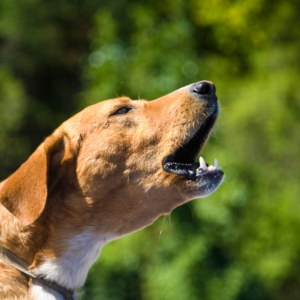
A dog’s bark can be surprisingly loud and can range anywhere from 60 to 110 decibels. However, larger breeds with a more powerful bark can even reach the higher end of the scale compared to little dogs, who tend to have a higher pitch.
See the decibel chart below to get an idea of how loud a dog bark is compared to other loud noises you are familiar with.
| Decibel Chart | Decibles |
| Whisper | 30 |
| Normal Conversation | 60 |
| Traffic | 70 |
| Lawnmower | 90 |
| Car Horn | 110 |
| Jet Plane Taking Off | 120 |
What is the loudest dog bark ever recorded?
The loudest dog bark ever recorded is by a Golden Retriever named Charlie, who set the Guinness World Record for the ‘Loudest Bark by a Dog’ in 2012 with an ear-splitting 113.1 decibels. To put this in perspective, the CDC says at 110 decibels, hearing loss is possible with two minutes of exposure.

Which dog breed has the softest bark?
The Whippet is often noted for having one of the softest barks among dog breeds. Known for their swift speed and slender, athletic build, Whippets are also lauded for their generally quiet nature.
Their barks tend to be softer and less frequent compared to other breeds, making them an excellent choice for individuals who prefer a quieter canine companion.
However, as with all dogs, individual temperament and environment can influence their vocalization patterns.
Listen to this video to get an idea of what a Whippet sounds like.
What is the purpose of a dog barking?
Dog barking serves several purposes and is a primary means of canine communication. Dogs bark to alert their owners or pack members of potential threats or changes in their environment, effectively acting as a warning or alarm system.
Barking can also signify excitement, fear, anxiety, or boredom. Also, dogs may bark to seek attention or express the need for something, such as food, water, or to go outside.
Some dogs also bark during play as a form of social interaction with humans or other dogs. Understanding the context and specific characteristics of the bark can aid owners in deciphering what their dog might be trying to communicate.
Why do some dogs bark all the time?
Some dogs may bark excessively due to a variety of factors. One common reason is boredom or loneliness, especially in dogs left alone for extended periods. They may also bark incessantly in response to specific triggers, such as other animals, doorbells, or even cars passing by.
Anxiety can also cause a dog to bark more frequently. This is often the case with separation anxiety, where dogs bark continuously when their owner is absent.
Again, some breeds are more prone to barking than others due to their genetics and the roles they were originally bred for, such as herding or hunting dogs.
Lastly, inadequate training can also lead to excessive barking. Dogs may not understand when it’s appropriate to bark if they haven’t been appropriately trained. Therefore, understanding the cause of persistent barking is the first step toward addressing this behavior.

Is it true that small dogs bark more than big dogs?
Yes, smaller dogs tend to exhibit more excessive barking than their larger counterparts.
We can observe a correlation between lower bark scores and heavier average weight by examining the chart above and comparing the dogs with the lowest barking score (bark the least) to those with the highest score (bark the most). Although this approach may not be entirely scientific in answering the question, it’s certainly interesting.
- The average dog weight of the breeds who ranked one (Least Barky) on our scale was 65.69 lbs.
- The average weight of the dog breeds that ranked fifth (Most Barky) on our scale was 34.85 lbs.
Do puppies bark more than adult dogs?
Puppies and young adults often bark more than mature adult dogs, primarily due to their youthful enthusiasm and ongoing learning and exploration process. Puppies may bark to express excitement, curiosity, or even frustration as they navigate their new environments and experiences.
However, as puppies mature and undergo proper training and socialization, their frequency of barking typically decreases. Adult dogs are usually more selective about when they bark, often doing so to alert their owners of potential threats or when they need something.

How to train a dog not to bark at everything
Training a dog not to bark at everything involves consistency, patience, and understanding of your dog’s needs and triggers. Here’s a step-by-step guide:
- Identify the cause of the barking: Dogs bark for various reasons, such as fear, boredom, or alerting you to something. Identifying the cause can help tailor your training methods.
- Remove or address the trigger: If possible, eliminating the cause of the barking can quickly solve the issue. For instance, if your dog barks at people walking by the window, consider closing the blinds or moving the dog to another room.
- Use the ‘quiet’ command: Start by allowing your dog to bark 2-3 times, then say “quiet” in a firm, calm voice. When they stop barking, reward them with a treat or affection.
- Distract your dog: If the barking continues, try to distract them with a command they know or a toy. This redirection can calm them down and focus their attention on something else.
- Ignore the barking: If your dog is barking for attention, ignoring them until they stop can be effective. Do not yell at them; they may think you’re barking along with them, and negative reinforcement (yelling) as a training style does not work.
- Practice desensitization: If your dog barks at specific triggers, gradually expose them to these situations until they become accustomed to them and stop barking.
- Seek professional help: If the barking continues despite your efforts, consider enlisting the help of a professional dog trainer.
Training takes time and consistency, so don’t get discouraged if your dog doesn’t immediately stop barking. Celebrate small successes and stay patient.
Final Thoughts
When it comes to selecting the perfect furry companion for your home, taking into account the dog’s barking tendencies can be a vital aspect of the decision-making process. By considering their bark, you can choose a furry friend that aligns with your lifestyle and creates a happy and peaceful atmosphere in your home.
Need more help finding the perfect dog breed? Check out these articles…