If you have owned a Boston Terrier for a few months now, you may have discovered a weird heaving sound coming from them. The first time Bella did this in front of Emily and me, we thought she was choking. Bella’s entire body started rocking back and forth as her body tensed up, and she was sucking for air.
This guide is part of our overview of the 10 most common Boston Terrier health problems. You may also find 7 Signs Your Boston Terrier Is Overheating and What Is Brachycephalic Syndrome in Boston Terriers? helpful.
Have no fear. This episode is called a reverse sneeze. And these reverse sneezes happen in all dogs but is seen more often in smaller dogs, especially ones with flat faces like Boston Terriers and pugs.
Here is everything you need to know about reverse sneezes and how to handle it the next time it happens to your dog.
What Is Reverse Sneezing In Dogs?
A reverse sneeze (also called inverted, backward, or inspiratory paroxysmal respiration) occurs in all dogs but is often found in the brachycephalic breeds (flat-faced dogs). The dog will tense up, breath in heavily, looking like it is short of breath. Like a regular sneeze, clearing out the nasal passageway, a reverse sneeze clears out the portion behind the nasal cavity, but not far enough down to cause a cough.
Read: Love Boston Terrier Puppies? Dog Breed Facts, Features, and Traits!
What Does Reverse Sneeze Look Like?
Yes, I can describe what a reverse sneeze looks like again. However, I think these three videos will help illustrate precisely what reverse or inverted sneeze looks like.
What Causes A Reverse Sneeze In Dogs?
A reverse sneeze is caused due to several different reasons. Below is a list of reasons why your dog is having reverse sneezes.
- Excitement
- A sudden change in temperature (moving from inside to outside)
- Eating to quickly
- Mites in your dog’s nose
- Mucus
- Grass or other plants or pollen
- Smoke
- Odors
Every dog is different when it comes to the causes of a reverse sneeze. Bella’s reverse sneezes were so infrequent I never figured out what her trigger was. Bella has had reverse sneezes due to excitement, going on walks, as well as after she ate to fast.
I have spoken with other Boston Terrier owners who say their dog has a reverse sneeze every time it goes outside. While another owner says, her dog has them every time it eats.
If you have multiple dogs and they are all having reverse sneezes, especially more often you may have mites or a common pollutant in your home triggering these sneezes.
How Long Does A Reverse Sneeze In Dogs Last?
A reverse sneeze in Bella lasts about 20 to 30 seconds. A typical episode lasts no more than one minute. However, there have been cases where a reverse sneeze has lasted longer than a minute in other dogs.
How To Help Your Dog In A Reverse Sneeze
There are three techniques you can use to help your dog during a reverse sneeze.
1) Hold Chest And Calm
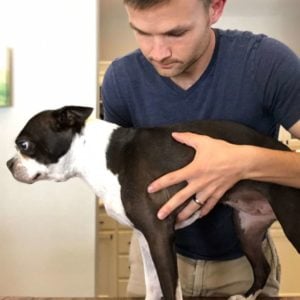
The hold chest and calm is a method Emily, and I haphazardly discovered with Bella. Like I said before, Emily and I had no idea what was going on when her first reverse sneeze occurred. So Emily grabbed her rib cage with both hands applying firm pressure to help calm and comfort Bella. We did this every time after that.
Here is a video of how I hold Bella during a reverse sneeze. The clip of me doing the technique occurs at one minute and twenty-four seconds (1:24) if you want to skip ahead of me explaining everything.
2) Hold One Nostril
In this technique, you hold one nostril of your dog closed with a finger and ensure your dog’s mouth is closed. By only allowing your dog to breathe through one nostril for a couple of seconds, they will begin to calm down.
This technique reminds me of movies when you see someone trying to calm down by simply breathing into a brown paper bag.
Here is a video on how to do this technique:
3) Move To A Different Environment
In this technique, you simply move your dog to a new environment, preferably outside with fresh air. This can help reset your dog, and the action of picking them up can also help to calm them.
Will Reverse Sneezes Harm My Dog?
No, Bella had reverse sneezes for years, and they were not a problem. Once again, reverse sneezing is just like a regular sneeze where you are cleaning out the nasal cavity, and this is a natural bodily response.
However, if the cause of the reverse sneeze is a pollutant or mites, this can cause damage to your dog’s health.
If you see an increase in your dog’s reverse sneezes, you will want to go and speak to your veterinarian. Your vet will then be able to determine the causes of the reverse sneeze. Also, your vet can tell you if further treatments should be taken.
Frequently Asked Questions
Is reverse sneezing dangerous for my Boston Terrier?
In most cases, no. A reverse sneeze is a natural reflex that clears the area behind the nasal cavity, much like a regular sneeze. Bella had them for years without any problems. If the episodes become more frequent, see your veterinarian to rule out things like mites or an irritant in your home.
How long does a reverse sneeze last?
Bella’s reverse sneezes usually last about 20 to 30 seconds, and a typical episode lasts no more than one minute. Some dogs can have episodes that run longer.
What triggers reverse sneezing in Boston Terriers?
Common triggers include excitement, eating too quickly, a sudden temperature change, pollen or grass, smoke, strong odors, mucus and nasal mites. Every dog is different. Some Bostons reverse sneeze when they go outside, others after meals.
How can I stop my dog’s reverse sneeze?
Stay calm and comfort your dog. Emily and I would gently hold Bella’s chest with both hands, but you can also briefly close one nostril with your mouth held closed, or move your dog to fresh air. These simple steps can help shorten the episode.
Why do Boston Terriers reverse sneeze so often?
Reverse sneezing happens in all dogs, but it is more common in small, flat-faced breeds like Boston Terriers and Pugs. Their short noses make them more prone to these episodes.
Final Thoughts…
A reverse sneeze is a regular bodily action that occurs in dogs just like a sneeze occurs in humans. There is nothing to be worried about if your dog has these from time to time. However, if you want peace of mind or if there is an increase in the number of reverse sneezes see your vet.
Bella had these types of inverted sneezes for years. It is scary when you first see these episodes. Follow the three techniques laid out in this article, and you can help shorten the event.
Read: 10 Signs Your Boston Terrier Hates You!
For more real-world notes on Boston health and what to watch for, I gathered them in my book .
References:
- PetMD – Reverse Sneezing In Dogs: Is it Normal?

- VCA Hospitals – Reverse Sneeze In Dogs